
Key Takeaways:
- There are several types of roof tiles, including clay, concrete, slate, metal, composite, solar, and wood, each offering unique styles, durability, and maintenance needs.
- Roofing costs range from $2 to $45 per sq. ft., with premium materials like slate and clay lasting 50 to 100 years or more, providing better long-term value.
- The best roof tile depends on your budget, climate, home style, and roof structure, as heavier tiles may require additional support while lighter options are easier to install.
When it comes to upgrading or replacing your roof, choosing the right roof tiles is one of the most important decisions you’ll make. Roof tiles don’t just protect your home from the elements; they define its style, curb appeal, and long-term value.
From traditional clay tiles to modern solar options, there are many types of roof tiles, each with unique costs, lifespans, styles, and maintenance needs. In this guide, we’ll cover everything you need to know, including:
- The main roof tile materials and their pros and cons
- Popular roof tile styles and shapes
- Cost comparisons for each tile type
- Key factors to consider before making your decision
Factors to Consider Before Choosing Roof Tiles
While appearance plays a significant role, it’s also important to consider the advantages of tile roofing, including its durability, energy efficiency, and longevity, alongside factors such as cost and long-term suitability.
1. Durability & Lifespan
Some tiles, like slate and clay, can last 50 to 100 years, while others, like wood shakes, may need replacement in 20–30 years. If you plan to stay in your home long-term, investing in durable materials can save money over time.
2. Weight & Structural Support
Heavy materials like slate and clay require reinforced roof structures. If your current framework isn’t built for heavy loads, lighter alternatives like metal, composite, or concrete may be better.
3. Maintenance Requirements
Clay and slate tiles are durable but may require periodic inspections and specialized repairs. Metal and composite tiles are generally low-maintenance.
4. Budget & Long-Term Value
Look beyond upfront costs. A cheaper material like asphalt or basic concrete might save money today, but investing in higher-end tiles often pays off over decades.
5. Climate Compatibility
Your local weather plays a huge role:
- Hot, sunny climates: Clay and terracotta perform best.
- Storm-prone regions: Metal tiles offer excellent wind and hail resistance.
- Cold, snowy areas: Slate and composite tiles are ideal.
Types of Roof Tiles by Material
When homeowners search for “roof tile types,” they’re usually comparing the main materials. Here’s a detailed breakdown of the most common options:
1. Clay Roof Tiles

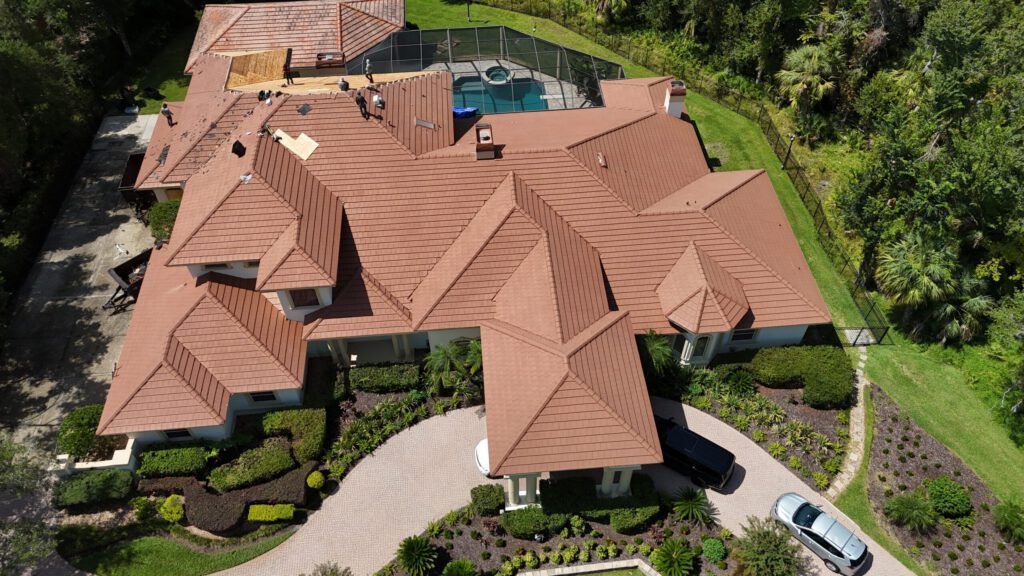
Clay tiles are among the oldest and most traditional roofing materials, offering a timeless aesthetic.
Pros
- Extremely durable (50–100 years)
- Fire- and rot-resistant
- Retain their color over time
Cons
- Heavier than most materials
- Higher upfront cost
- Require skilled installation
Best For: Hot, sunny climates and Mediterranean or Spanish-style homes
Cost: $7–$15 per sq. ft.
2. Concrete Roof Tiles

Concrete tiles are a more affordable alternative to clay, offering similar aesthetics with added versatility.
Pros
- Available in various textures and styles
- More budget-friendly than clay or slate
- Resistant to fire, wind, and hail
Cons
- Heavier than composite or metal
- Colors may fade over time
- Shorter lifespan (30–50 years)
Best For: Homeowners wanting a classic tile look on a tighter budget
Cost: $3–$10 per sq. ft.
3. Slate Roof Tiles

Slate is a premium natural stone roofing material known for its beauty and longevity.
Pros
- Can last 100+ years
- Natural, elegant aesthetic
- Highly fire-resistant and eco-friendly
Cons
- Among the most expensive options
- Very heavy; structural reinforcement required
- Repairs are complex and costly
Best For: High-end homes, historic properties, or homeowners seeking luxury
Cost: $10–$30 per sq. ft.
4. Metal Roof Tiles

Modern metal tiles, often made from steel, aluminum, or copper, are increasingly popular for their versatility.
Pros
- Lightweight, easy to install
- Excellent resistance to storms and fire
- Can mimic slate, clay, or wood tile patterns
Cons
- Prone to dents in hail-prone regions
- Can be noisy during heavy rain
- Copper variants are expensive
Best For: Homes in storm-prone or coastal regions
Cost: $5–$14 per sq. ft.
5. Composite (Synthetic) Roof Tiles

Composite tiles are made from recycled materials and polymers and are engineered to mimic natural materials without the drawbacks.
Pros
- Lightweight and easy to install
- Replicates clay, slate, or shake aesthetics
- Eco-friendly and highly durable
Cons
- Quality varies by manufacturer
- Less traditional compared to clay or slate
Best For: Modern homeowners seeking sustainability and design flexibility
Cost: $2–$6 per sq. ft.
6. Solar Roof Tiles

Solar tiles combine function and sustainability by generating electricity while protecting your home.
Pros
- Renewable energy source
- Sleek, modern appearance
- Reduces long-term utility costs
Cons
- High upfront investment
- Requires specialized installation
Best For: Eco-conscious homeowners wanting cutting-edge technology
Cost: $20–$45 per sq. ft.
7. Wooden Roof Tiles (Cedar Shakes)

Wood tiles offer a rustic and natural appearance, often used in traditional or cottage-style designs.
Pros
- Natural charm and visual warmth
- Can be sustainably sourced
Cons
- Requires frequent maintenance
- Susceptible to mold, rot, and fire
Best For: Rustic, cabin, or country-style homes
Cost: $6–$12 per sq. ft.
Roof Tile Styles and Shapes
Roof tiles aren’t just about materials; style also influences appearance, drainage, and installation.
- Spanish Roof Tiles: These tiles have a rounded barrel shape that creates smooth, wave-like patterns. They’re ideal for Mediterranean and Spanish-style homes and work well in areas with heavy rainfall.
- Mission Roof Tiles: Mission tiles feature a two-piece convex and concave design that forms bold shadows. They provide a classic, handcrafted look but require skilled installation.
- Flat Shingle Tiles: Flat shingle tiles have a smooth, uniform surface for a clean, minimalist appearance. They suit modern and contemporary homes and are easier to install than curved styles.
- Interlocking Tiles: These tiles lock tightly together for better wind and water resistance. They’re a great choice for storm-prone regions and come in various textures and finishes.
- Scalloped & Specialty Styles: Scalloped tiles feature fish-scale-like edges for a decorative look. Specialty styles, like French or graduated tiles, create unique, custom designs for upscale homes.
Conclusion: Find the Roof Tile That Fits Your Home
Choosing the right roofing material is about balancing budget, style, climate, and longevity. From the timeless elegance of slate and clay to the modern efficiency of solar tiles, there’s a perfect option for every homeowner.
For expert installation and long-lasting results, homeowners from Cheval, FL to the rest of the Tampa Bay area trust Suncoast Roofing Solutions. With over 30 years of experience in tile, shingle, metal, and solar roofing, our skilled team delivers premium materials and exceptional craftsmanship. Contact us today for a free estimate!
FAQs About Roof Tiles
What Are the Most Common Types of Roof Tiles?
Clay, concrete, slate, metal, composite, and solar tiles are the most widely used.
Which Roof Tile Lasts the Longest?
Slate and clay tiles can last 50 to 100 years or more with proper care.
Are Roof Tiles Better Than Shingles?
Roof tiles are more durable and stylish but heavier and pricier than asphalt shingles, which are easier and cheaper to install.
Are Ceramic (Clay) Tiles Better Than Shingles?
Clay tiles are more durable, fire-resistant, and long-lasting but costlier and heavier than shingles.