
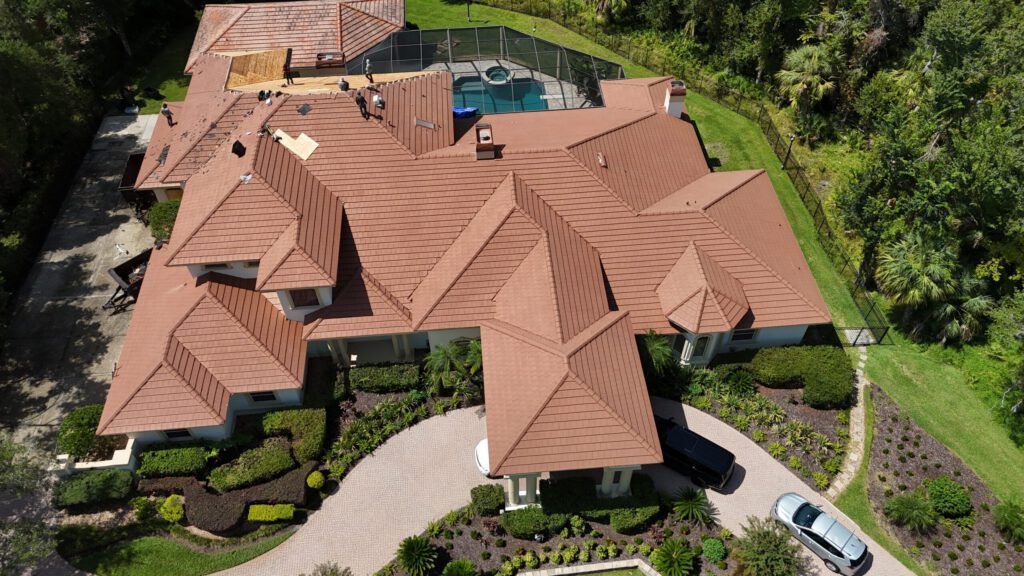
Roof estimates often include the term “roofing square.” If you are planning a roof repair or replacement in Tampa, you will likely see this term in contractor quotes. Many homeowners are not familiar with it, which can make estimates harder to understand.
A roofing square is a simple measurement used across the roofing industry. Contractors rely on it to estimate materials, labor, and cost. When you understand how roofing squares work, you can compare quotes with confidence and plan your roofing project more clearly.
This guide explains how many square feet are in a roofing square, how contractors calculate roof size, and how this measurement affects roofing projects in Tampa.
Key Takeaways
- One roofing square equals 100 square feet of roof area
- Roofing contractors use squares to estimate materials and labor
- Most asphalt shingle roofs require about three bundles of shingles per square
- Roof pitch and design can increase the number of roofing squares needed
- Accurate roof measurements help Tampa homeowners compare quotes and control project costs
What Is a Roofing Square?
A roofing square is a standard measurement used in the roofing industry. One roofing square equals 100 square feet of roof surface.
You can picture it as a 10-foot-by-10-foot roof section.
Roofing contractors use this measurement to estimate materials such as shingles, underlayment, and flashing. It also helps contractors calculate labor and pricing for a roofing job.
For example:
100 square feet = 1 roofing square
1,000 square feet = 10 roofing squares
2,000 square feet = 20 roofing squares
Using roofing squares makes estimating easier because most roofing materials are packaged and priced using this unit.
Why Roofers Use Roofing Squares Instead of Square Feet
Roofing squares help contractors simplify measurements and estimates.
Imagine measuring a roof that is 2,300 square feet. Instead of using that number in quotes, contractors convert it into roofing squares.
2,300 square feet ÷ 100 = 23 roofing squares
This system makes it easier to calculate materials, compare estimates, and order supplies. Roofing suppliers also package materials based on square coverage, which keeps ordering consistent across the industry.
Roofing squares also allow contractors to communicate quickly with suppliers, crew members, and homeowners.
How to Convert Square Feet to Roofing Squares
The formula to convert roof area is simple.
Square feet ÷ 100 = Roofing squares
Example 1
A roof measures 1,500 square feet.
1,500 ÷ 100 = 15 roofing squares
Example 2
A roof measures 2,400 square feet.
2,400 ÷ 100 = 24 roofing squares
This basic formula gives the starting point for estimating roofing materials. Contractors may add extra squares to account for roof pitch, waste, and roof design.
How Many Bundles of Shingles Are in a Roofing Square?
Roofing materials are often sold in bundles rather than by the full square.
For most asphalt shingles, three bundles cover one roofing square, which equals 100 square feet.
Here is a simple example.
If your roof requires 20 roofing squares:
20 squares × 3 bundles = 60 bundles of shingles
Some heavier or premium shingles may require four or even five bundles per square. Manufacturers include coverage details on packaging to confirm the correct amount.
Why Roof Size Is Not the Same as Home Square Footage
Many homeowners assume their roof size matches the square footage of their home. In reality, the roof area is often larger.
Several factors increase roof surface area:
- Roof pitch or slope
- Roof overhangs
- Dormers and skylights
- Complex roof shapes
For example, a 2,000-square-foot home might have a roof that is closer to 2,200 or 2,400 square feet, depending on the design.
That difference can change the number of roofing squares needed for the project.
How Roof Pitch Changes Roofing Square Calculations
Roof pitch refers to the steepness of the roof.
A steeper roof has more surface area than a flat or low-slope roof. When contractors calculate roofing squares, they adjust measurements to account for this added area.
For example:
A roof footprint may measure 2,000 square feet on paper. After adjusting for pitch, the actual roof surface might measure closer to 2,200 square feet.
That increase means more shingles and materials are required.
Experienced roofing contractors always account for roof pitch when calculating roofing squares.
Roofing Square Estimates for Common Tampa Home Sizes
Roof size varies by design, but typical homes in the Tampa area often fall within these ranges.
- 1,200 square foot home = About 13 to 14 roofing squares
- 1,800 square foot home = About 18 to 22 roofing squares
- 2,500 square foot home = About 25 to 30 roofing squares
These estimates depend on roof design, slope, and architectural features. Homes with multiple roof sections or steep slopes often require more roofing squares.
Why Accurate Roofing Square Calculations Matter
Understanding roofing squares helps homeowners make informed decisions during a roofing project.
Accurate measurements help you:
- Compare contractor estimates
- Avoid overpaying for materials
- Understand roofing costs more clearly
- Plan budgets for repairs or replacement
A difference of just two or three roofing squares can significantly change the total project cost.
That is why professional measurement is important before starting any roofing work.
How Tampa Roofing Contractors Measure Roof Squares
Roofing contractors use several methods to calculate roofing squares.
- Manual measurement: Contractors measure roof sections directly and calculate the total surface area.
- Drone measurements: Some companies use drone technology to capture accurate roof measurements.
- Satellite measurement tools: Professional software can estimate roof size using aerial images.
These tools allow contractors to measure roof sections, calculate pitch, and estimate materials with high accuracy.
Signs You Should Ask a Roofer About Roofing Squares
There are several situations when understanding roofing squares becomes important.
You should ask about roofing squares when:
- Reviewing roofing quotes
- Planning a roof replacement
- Comparing multiple contractor estimates
- Filing an insurance claim for storm damage
If two quotes show very different square counts, it may mean one estimate is incorrect. Understanding roofing squares helps you identify these differences.
Frequently Asked Questions
How many square feet are in one roofing square?
One roofing square equals 100 square feet of roof surface. Contractors use this unit to estimate materials, labor, and project cost.
How many bundles of shingles are in a roofing square?
Most asphalt shingle roofs require three bundles of shingles for one roofing square. Some heavier shingles may require four or more bundles.
How many roofing squares does a 2,000 square foot roof have?
A 2,000-square-foot roof equals about 20 roofing squares, since each square represents 100 square feet.
Why do roofing contractors use roofing squares?
Roofing squares simplify estimating. Contractors can quickly calculate materials, labor, and project cost using a standard unit.
Does roof pitch affect roofing square calculations?
Yes. A steeper roof increases the actual surface area. Contractors adjust calculations to account for pitch so the correct amount of materials is ordered.
Wrapping Up
Roofing measurements can sound confusing at first, but the concept is simple. A roofing square equals 100 square feet of roof area. Contractors use this unit to estimate materials, plan installation, and calculate roofing costs.
When you understand roofing squares, it becomes easier to review estimates and compare contractor quotes.
If you are planning a roof repair or replacement in the Tampa area, including Cheval, FL, accurate measurements are essential. The team at Suncoast Roofing Solutions can inspect your roof, calculate the correct number of roofing squares, and provide a clear estimate for your project. Contact Suncoast Roofing Solutions today to schedule your free roof inspection.